


Melissa Lamson, PhD, is the UL Solutions technical lead for the ECOLOGO Certification Program, an ISO 14024-compliant ecolabel. In this role, she evaluates sustainability impacts across product life cycles, researches mitigation strategies, and develops criteria for technical committee review and consensus. She also supports the technical needs of UL Solutions’ customers and verifiers for the ECOLOGO and Environmental Claim Validation Programs.
Melissa has cleaning ingredient technical expertise and hands-on experience in the cleaning industry. She earned her PhD in polymer chemistry from Carnegie Mellon University and previously worked at BASF as a production support chemist in the Care Chemicals Division. Melissa was formerly a consultant at Anthesis, where she supported cleaning, personal care, and chemical industry clients to implement programs related to feedstock sustainability, restricted substance lists, and portfolio sustainability assessments.


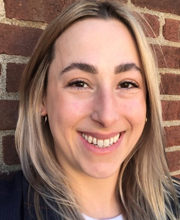
Brittany leads the organization’s standards strategy and product portfolio, guiding the development of science-based certification criteria that support market transformation and advance product sustainability. She ensures Green Seal’s offerings remain rigorous, credible, and responsive to evolving environmental challenges.
With deep expertise in technical research, stakeholder engagement, and science communication, Brittany bridges complex scientific insights and real-world application, supporting cross-sector collaboration to deliver solutions that are both ambitious and practical.
Prior to Green Seal, Brittany worked in the Drinking Water Branch at the Indiana Department of Environmental Management, where she led outreach initiatives and reviewed technical plans to support the protection and improvement of drinking water systems across the state.
She holds a B.S. in Biology: Environmental Science from the University of Wisconsin–La Crosse and an M.S. in Biology from Ball State University.
Outside of work, Brittany enjoys hiking, reading, and spending time with her family.
Jennifer Abril led SOCMA for nearly a decade before becoming ACI's President and Chief Executive Officer. Under her leadership, SOCMA refreshed its programming and offered new opportunities to develop business partnerships and build industry connections across the supply chain. She previously served as the association’s Director of Performance Improvement between 2006-2008 and was responsible for the development and implementation of ChemStewards®.
Prior to serving as SOCMA’s leader, Abril was President of the International Fragrance Association, North America from 2008-2016. She earned a B.A. in International Studies from The American University and holds a M.S. in Management from the University of Maryland, University College.
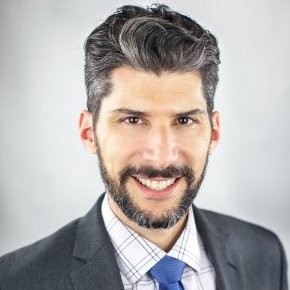

As NielsenIQ’s Vice President of Thought Leadership for Home, Family, & Baby, Darren Seifer (pronounced sigh fur) helps organizations decode how consumers care for their homes and family members. Known for blending analytical rigor with compelling storytelling, he transforms complex consumer and cultural signals into clear, actionable insights. Darren leverages his 25+ years of CPG/FMCG research experience to help shape strategy, spark innovation, and elevate understanding of the modern household. He is also a frequent speaker at industry events and has been quoted in numerous media outlets including The New York Times, The Wall Street Journal, NBC Nightly News, and Bloomberg.
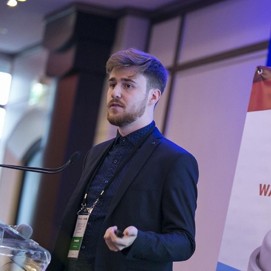
Filip is Euromonitor International’s global lead for home care research and strategic client engagement. He oversees the company’s global home care insights, authors flagship industry reports, and shapes the editorial direction of Euromonitor’s industry insights.
Widely recognised as a thought leader in the category, Filip delivers data-driven, forward-looking analysis to home care brands and retailers worldwide. His expertise helps clients navigate shifting consumer behaviours, category performance, and emerging industry opportunities.
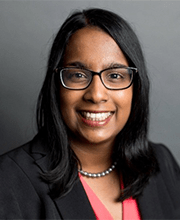

Arianna is a Global Market Segment Leader at IFF Health & Biosciences in Wilmington, DE. In her current role, she leads innovation and new product development projects within the Home and Personal Care Business. Previously, she was a Commercial Leader in IFF’s Health business where she led the Women’s Health platform and new product development projects with probiotics.
In addition to Arianna’s role at IFF, she is the global co-leader of NextGen, IFF’s employee resource group for early career professionals in the first 12 years of their first career.
Within ACI, she is a member of the Future Leaders Program as well as Microbial-Based Cleaning Product Task Force.
She holds a MBA from the Kelley School of Business at Indiana University and Bachelor of Music in Jazz Studies from Indiana University.
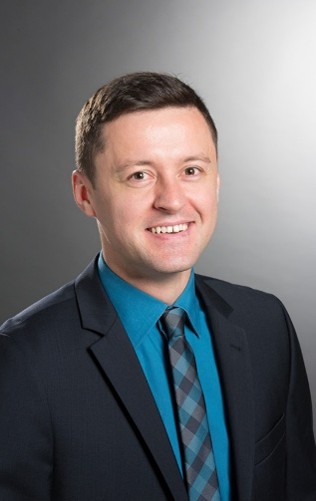
Emin Hrsic, Ph.D., joined Kao in 2019 and has since held technical roles across Europe and North America. He earned a German Diplom degree in Chemistry (equivalent to a Master's degree) in 2011 and a Ph.D. in Polymer Science in 2016, both from RWTH Aachen University, Germany.
After completing his Ph.D., he spent three years in the chemical industry, first as a formulation chemist and later in technical sales, before joining Kao Chemicals Germany in Emmerich. Since 2024, he has been with Kao Specialties Americas in North Carolina, where he focuses on the business development of surfactants for consumer applications.


Kazuya Okumura is currently responsible for the application development of functional solvents for household and industrial detergents. He received an M.S. degree in Engineering from the Graduate School of Engineering, Shizuoka University, Japan. Prior to joining Kuraray Co., Ltd., he was engaged in the development of novel coatings and coating resins at a paint manufacturer. Since joining Kuraray, he has been involved in application development for functional solvents, focusing on understanding and demonstrating their performance in a wide range of applications, including cleaning formulations, coatings, air fresheners and so on.
.png?ext=.png)
Madelyn Evans is a business development professional at Borregaard, working at the intersection of sustainable innovation and commercial deployment of biopolymers. With experience in advancing renewable technology solutions that reduce reliance on fossil-derived products, she focuses on translating cutting-edge chemistry into high-performance, sustainable solutions. Madelyn holds degrees in Chemistry from Northwestern University (Ph.D.) and UNC Chapel Hill (B.S.) and is passionate about enabling circularity and lower lifecycle emissions through novel technology implementation.


Karine has a dual Baccalaureate degrees form University of Laval and UQAC in Chemistry and in Microbiology. Mobile phone is 514-707-1395 [email protected] Postal address; 1800 Michelin ,Laval, Quebec, Canada, H7L 4R3 Karine Lapointe is a Chemist and a microbiologist and has been working in the field for the last 30 years. Specialty included development of formulation for the personal care, HI&I market and industrial including plastics and ink. Currently she is a Technical Marketing Manager for the global Chemical Distribution division of Brenntag and covering Canada and the United States. Some interesting aspect of her career include managing a masterbatches plastic plant and setting color technology standard for the plastic and printing industry. This include developing a patent for ink quality and measurement control. In the last 15 years, working has a technical sale manager at Brenntag in the Personal care market and supporting development of formulation with customer.

Jenna Arkin is the forceful innovator behind ECOS®'s safer and greener cleaning products. With a degree in Integrative Biology from the University of California, Berkeley, and a graduate degree in Fashion Design from the Fashion Institute of Design and Technology, Jenna brings a unique combination of scientific expertise and creative passion to her work.
As the Chief Innovation Officer at ECOS®, Jenna is leading the charge in developing safer chemical formulations and bold packaging designs that are changing the game in the cleaning industry. Her disruptive mindset and sharp eye for trends have inspired out-of-the-box thinking, connecting seemingly disparate concepts to move the industry towards a more sustainable future.
Jenna is a futurist who is not afraid to take risks. She holds six U.S. patents for her innovations in green chemistry and packaging design, and was recognized as one of Progressive Grocer's GenNext Award winners in 2018 for industry standouts under the age of 40. In 2022, Jenna led ECOS® to become one of Fast Company's World's Most Innovative Companies, cementing her status as a thought leader and innovator.


Darci Ferrer provides support to clients on a wide range of regulatory and scientific topics related to chemical management with a focus on Federal Insecticide, Fungicide, and Rodenticide Act (FIFRA) regulated products. This includes helping clients determine a pathway to registration of new active ingredients and end products. She has broad experience in regulatory and scientific affairs regarding a variety of industrial and consumer products, including pesticides, cleaning products, and fragrance materials. Furthermore, Darci's experience in chemicals regulation is comprehensive, including advisory and scientific work with industry leaders.
Prior to joining Steptoe, Darci served as Chief Scientist for a leading trade association where she was accountable for regulatory analysis and advocacy for the fragrance industry in the US and Canada, providing direct support and assistance to association members. She regularly developed comments on regulatory proposals and met directly with regulators to discuss potential opportunities and concerns of new and proposed regulations. Of note, Darci led early industry efforts to support the EPA risk evaluation of one of the first twenty substances selected for review by EPA under the amended Toxic Substances Control Act (TSCA).
Her past experience also includes developing and submitting state and federal pesticide registrations and point source environmental exposure assessments.


Jaci Volles is a results-driven marketing executive with more than 25 years of experience shaping brand strategy, business development and commercialization for global consumer product companies. Known for her ability to spot emerging trends and translate insight into action, she has led transformative category strategies across B2B, B2C and DTC markets, driving sustainable growth and stronger brand relevance. A trusted industry voice, Jaci blends visionary thinking with operational rigor, bringing deep expertise in product innovation, category and channel development, digital marketing and customer segmentation.

Brian T. Sansoni is the Senior Vice President of Communication, Outreach & Membership at the American Cleaning Institute. ACI is the trade association for the cleaning products industry in the United States, based in Washington D.C.
Since 2000, Mr. Sansoni has served as a spokesman for ACI and is responsible for the association’s external and internal communication activities, including media relations and promotion of the ACI’s technical, government affairs, sustainability and consumer education activities.
In 2012, he was named Vice President, Sustainability Initiatives, reflecting the work already done to build ACI’s sustainability programs that showcase how ACI members are leading the way in demonstrating sustainability every single day. This includes the 2011 release of the first-ever Sustainability Report for the U.S. cleaning products industry.
Mr. Sansoni also directs ACI’s membership development and member retention efforts.
Prior to joining ACI, Mr. Sansoni worked at the Grocery Manufacturers of America (now Grocery Manufacturers Association), the world’s largest association of food, beverage, and consumer product companies. While there, he served as Senior Manager for Public Policy Communications, working as a spokesman for association positions on issues like food biotechnology, food and product safety, obesity, and irradiation.


My interests lie at the intersection of life sciences, technology, and business, and I am betting my career on the biorevolution and the emerging bioeconomy. Currently I am building Cascade Biocatalysts with the dream of easy-to-use enzymes that are both economical and scalable for greener chemical manufacturing.
Before leading Cascade, I was a product manager for the computational product discovery team at Zymergen, focused on using software and data science tools to accelerate new molecule discovery from biology.
Before Zymergen, my experience as an associate at Bain & Company coupled with my technical education as a chemical engineer at Stanford and the Dow Chemical company provided me a unique skill which has allowed me to excel at the interface of technology and business.

Alex Mayer is a senior scientist at the Clorox Company. As a product developer on Clorox Pure, he has spent the last 4 years working with the team to bring this new innovation to life in the air care aisle.
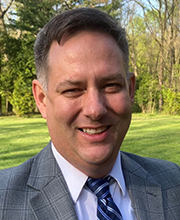

Dr. Jeff Van Komen is a recognized leader, innovator and formulator in the cleaning product industry, currently serving as a Senior Scientist at Pilot Chemical Company.
With 15+ years of experience, he has been instrumental in the successful development and commercialization of numerous cleaning products across a wide range of categories, including laundry detergents, hand dishwashing liquids, all-purpose cleaners, antibacterial formulations, and air care products.
Prior to his impactful contributions in cleaning products, Dr. Van Komen was an accomplished immunologist at the Oklahoma Medical Research Foundation. There, his research into membrane lipid dynamics in T-cells provided invaluable work in complex biological systems and meticulous analytical methodologies – skills that directly inform his nuanced approach to chemical formulation and problem-solving today.
Dr. Van Komen holds a Ph.D. in Biochemistry & Cell Biology from Rice University and demonstrated through active involvement in pivotal organizations including the American Cleaning Institute (ACI), Household & Commercial Products Association (HCPA), and the ASTM E35 Committee.
.png?ext=.png)